
Sleep Apnea Treatment in Carrboro, NC
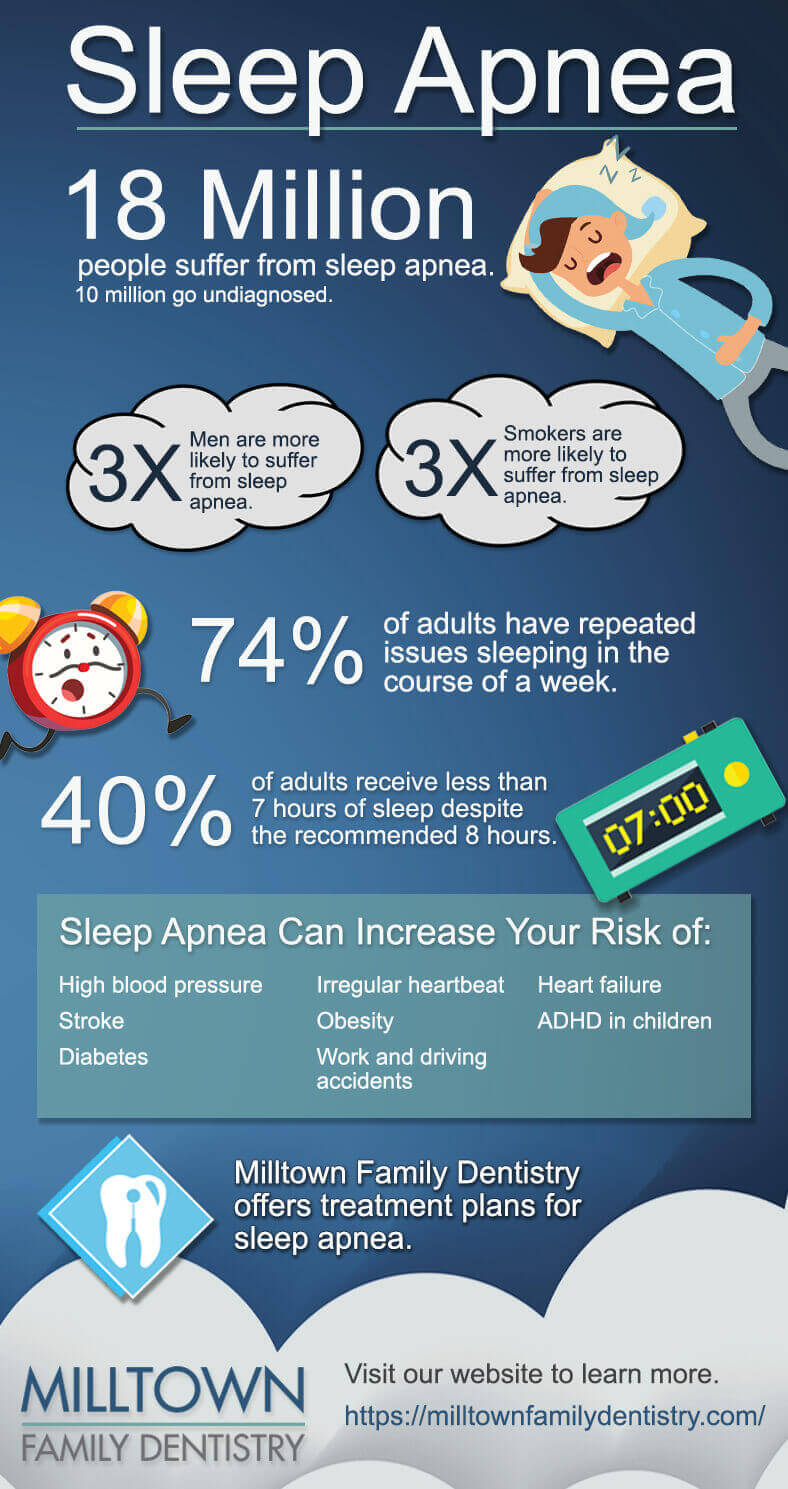
Sleep apnea is a condition where someone repeatedly stops breathing while they’re sleeping due to a blocked airway or a lack of signals between the brain and breathing muscles. When breathing is interrupted, the brain may not get enough oxygen, which can not only lead to poor performance and concentration during daily activities but also serious health concerns, such as high blood pressure, heart failure, and diabetes.
At Milltown Family Dentistry, we can help treat sleep apnea using oral appliance therapy. You can go back to more restful nights and recharged days, and you can help prevent further health complications from occurring.
Make AppointmentSymptoms of Sleep Apnea
As its name suggest, sleep apnea occurs while you are sleeping so it can sometimes be difficult to determine whether or not you have the condition. There are, however, some symptoms of sleep apnea that show during the day or while you’re awake that you can look out for:
- Waking up due to shortness of breath/gasping for air
- Dry mouth or sore throat
- Headache
- Excessive sleepiness
- Difficulty concentrating
- Irritability or mood changes
- Insomnia
Otherwise, your partner or others close to you may notice these symptoms while you sleep:
- Loud snoring
- Cessation of breathing
- Restless sleep
Although not everyone who snores is diagnosed with sleep apnea, snoring is one of the most common signs. If you notice you have any of the symptoms listed above, please contact our office so we can bring you in for diagnosis and plan the best treatment for your sleep apnea.
Sleep Apnea Solutions
There are different sleep apnea solutions depending on the type and severity of your sleep disorder. If you are looking for an alternative to a CPAP (continuous positive airway pressure) machine, there are dental appliances available that resemble a mouthguard. The oral appliance will position your lower jaw forward so that your airway is kept open. Many patients find that these are a more comfortable and more convenient treatment method.
While there are some oral appliances available over-the-counter, going to a dental professional for sleep apnea treatment ensures that you’re getting a device with the best fit and most effective results. At Milltown Family Dentistry, Dr. Ben Lambeth is trained in sleep apnea oral appliance therapy. We can help you treat your sleep apnea!
Frequently asked questions
Can a sleep apnea appliance help stop snoring?
A custom oral appliance can help reduce or even stop snoring for many patients, particularly when the snoring is related to obstructive sleep apnea or airway blockage. The appliance gently repositions the jaw during sleep to help keep the airway open. By improving airflow, the vibrations that cause snoring can be greatly reduced. Not everyone is a candidate for oral appliance therapy, so we will evaluate your symptoms and work with your medical provider or sleep specialist when appropriate to determine whether a custom oral appliance is right for you.
What are the benefits of a custom oral appliance for sleep apnea versus a CPAP machine?
Both oral appliance therapy and CPAP can be effective treatments for obstructive sleep apnea, but they work differently. A custom oral appliance is small, portable, and worn in the mouth while you sleep, which some patients find easier to use than a CPAP machine. It does not require a mask, hose, or electricity either. Oral appliances may be particularly appropriate for patients with mild to moderate obstructive sleep apnea or those who cannot tolerate CPAP. We can help determine which option best fits your needs.
Is sleep apnea serious?
Untreated obstructive sleep apnea can be a serious health condition and should not be ignored. Repeated interruptions in breathing can reduce oxygen levels and place stress on the cardiovascular system. Over time, untreated sleep apnea is associated with increased risks for conditions such as high blood pressure, heart disease, and stroke. Severe sleep apnea can also cause significant daytime sleepiness and increase the risk of accidents. If you or your partner notice loud snoring, gasping, choking, or pauses in breathing during sleep, talk with a healthcare provider about getting evaluated.
How do I get tested and treated for sleep apnea?
The first step is a sleep apnea evaluation. We will discuss your symptoms, sleep habits, medical history, and any concerns you or your sleep partner have noticed. If sleep apnea is suspected, you may need a sleep study, which can often be completed at home or through a sleep specialist. Once a diagnosis is made, treatment depends on the type and severity of your condition. Options may include CPAP, lifestyle changes, or a custom oral appliance. We can coordinate with your physician or sleep specialist to help determine the appropriate treatment.