
Restorative Dental Care
Whether you have a little bit of decay or you’re missing multiple teeth, the Milltown Family Dentistry team can help you restore your teeth to their full health and function again. Our dentist near you offers a full line-up of restorative treatments to fix almost any problem you might have.
Learn MoreComposite Fillings
When we detect decay during a routine exam, we remove it and fill the tooth. But unlike the silver fillings of the past, we use composite fillings. The composite materials are tooth-colored, so they look natural and don’t stand out next to your other healthy teeth. Placing a composite filling is also easier than placing silver amalgam fillings. They require less prep work and we don’t have to remove as much of the tooth structure. We’re usually able to fill your tooth the same day you come in for your exam.
Dental Crowns, Bridges & Implants
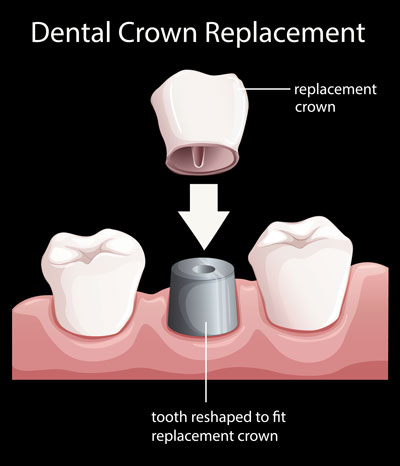
We use dental crowns for a number of restorative reasons. If you have a severe chip or crack, we can top your tooth with a crown to keep bacteria out and eliminate the sensitivity you’re likely experiencing. If we perform a root canal, we place a crown afterward to keep out future infections and add some strength to the tooth. We can also use a crown to cover a large filling and ensure that your bite isn’t changed.
If you replaced missing teeth with dental implants, we can provide your dental implant restoration to complete the process. The implant itself is a small titanium post placed into the jawbone in place of a missing tooth. Once the fusion is complete, visit our office for your restoration. If it’s a single tooth implant, we’ll top it with a dental crown. If you replaced a couple of teeth in a row, we often recommend using a dental bridge, which is an appliance that connects to crowns on either side of a gap and has false teeth that sit in place of your missing teeth.
Oral Surgery
A severe toothache or sudden, extreme sensitivity could mean that you have an infected tooth. If the infection is bad enough, we may recommend a root canal. But don’t worry; while the term “root canal” is associated with pain, we promise that you’ll be comfortable throughout the procedure.
While we always want to save your natural teeth, sometimes that’s not an option. If you need a tooth extraction, we will make sure that you’re comfortable throughout the procedure.
Frequently Asked Questions
When is a root canal recommended?
A root canal is typically recommended when the inner pulp of a tooth becomes inflamed or infected due to deep decay, a crack, trauma, or repeated dental procedures. Common symptoms include lingering sensitivity, tooth pain, swelling, or discomfort when chewing. By removing the infection and sealing the tooth, root canal therapy can relieve pain, preserve your natural tooth, and prevent the need for extraction.
Can tooth decay be reversed?
Early tooth decay can sometimes be reversed before a cavity forms. When decay is limited to the outer enamel layer, fluoride treatments, improved oral hygiene, and dietary changes may help remineralize the tooth and strengthen the enamel. Once a cavity develops, however, the damaged tooth structure cannot regenerate and restorative treatment is needed to repair the area and prevent further decay.
What restorative treatments are covered by insurance?
Many dental insurance plans provide coverage for common restorative procedures that help repair or replace damaged teeth. Depending on your plan, benefits may include fillings, crowns, bridges, root canal therapy, dentures, and certain tooth extractions. Coverage levels vary, so our team will review your benefits, explain your estimated costs, and help you maximize your insurance before treatment begins.
How long do dentures last?
Dentures are durable, but they are not designed to last forever. Most full and partial dentures last between five and ten years before needing replacement or significant adjustment. Over time, normal wear and natural changes in your gums and jawbone can affect their fit and function. Regular dental visits allow us to monitor your dentures and recommend relines, repairs, or replacements when needed.
Contact Us